
Saviour Trita and Dragon-serpent Vritra
Trita is the hero who restores the land’s fertility by defeating the serpent. Vritra wrestles with Indra, and hoards the waters. Who you think wins in the end reveals which archetype you manifest.

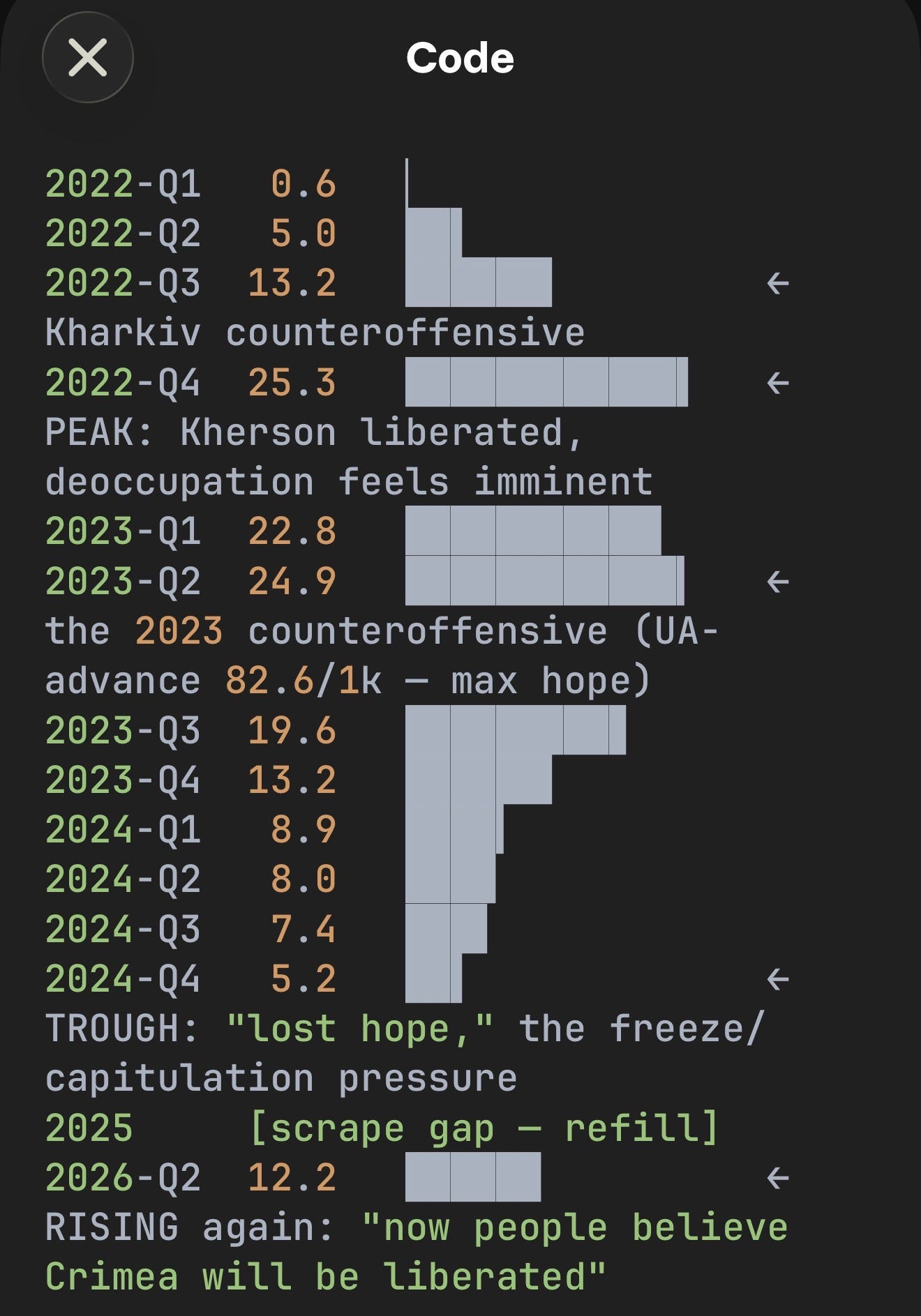
Two Ukrainians, both of whom have stood close to the centre of their country’s power, posted about the same war this week. One of them made you want to give up. The other made you want to keep going. They were not arguing about facts. They were striking two different notes — two of the oldest notes there are.

Our oldest stories know both of them by name.
The first is Trita — though he wears a hundred faces across the languages you and I are descended from. He is the hero who goes after what the dragon has stolen and brings it back: the waters, the cattle, the people taken into the dark. Wherever an Indo-European people told stories, they told this one. The dragon hoards; the hero reclaims. The reclaiming is the whole point.
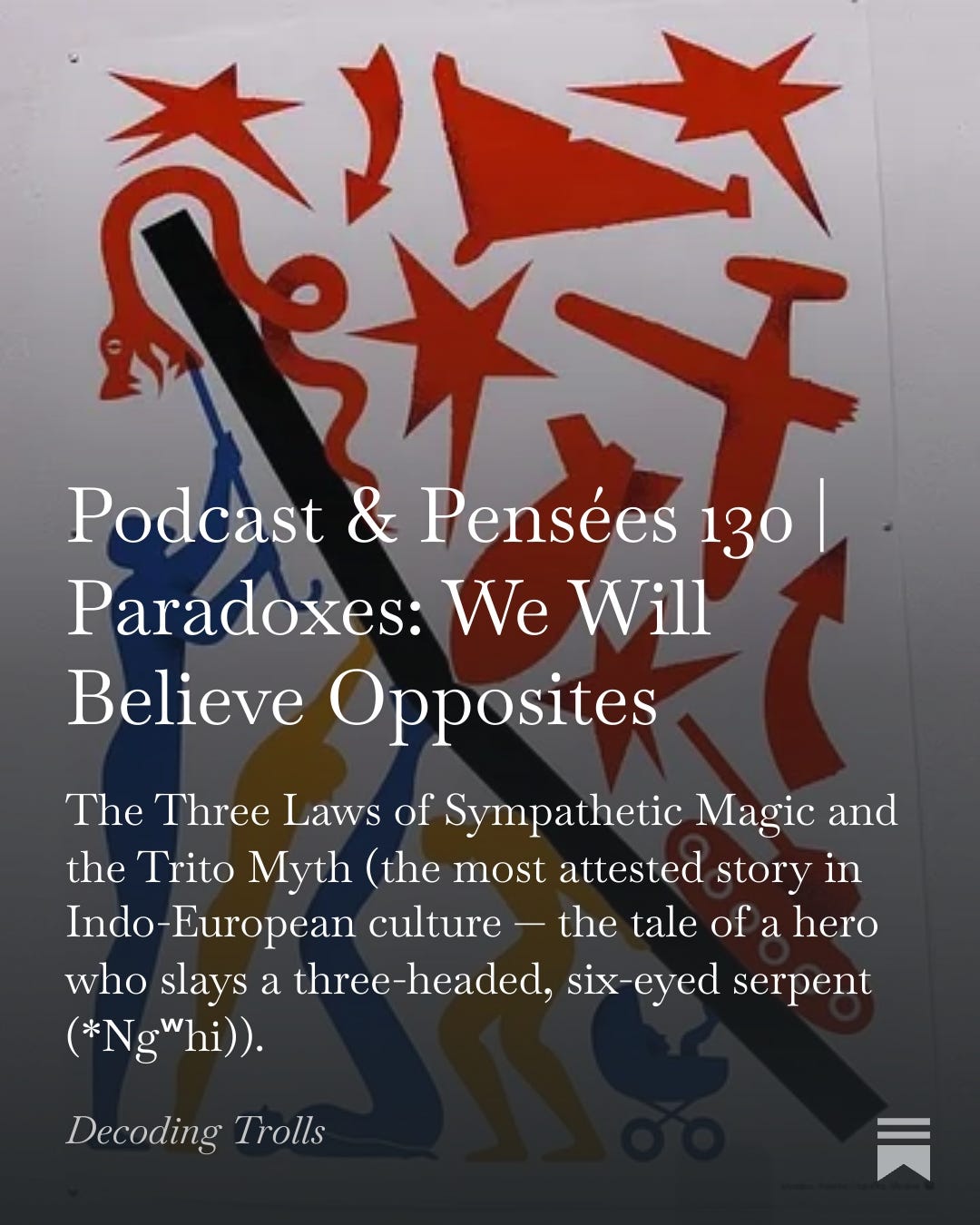
The second is the dragon himself — Vritra, the enveloper, the one who coils around what he has taken and holds it. Vritra’s message is never “I am winning.” It is subtler and more useful than that. It is: there is no point; you will only lose more; lay it down. Despair is the dragon’s best weapon, because a people who believe the dragon always wins will hand him the waters without a fight.
These are not decorations. They are tuning-forks. Strike Trita and a reader feels the pull to keep going; strike Vritra and she feels the quiet permission to stop. And both notes can be struck with nothing but true facts.
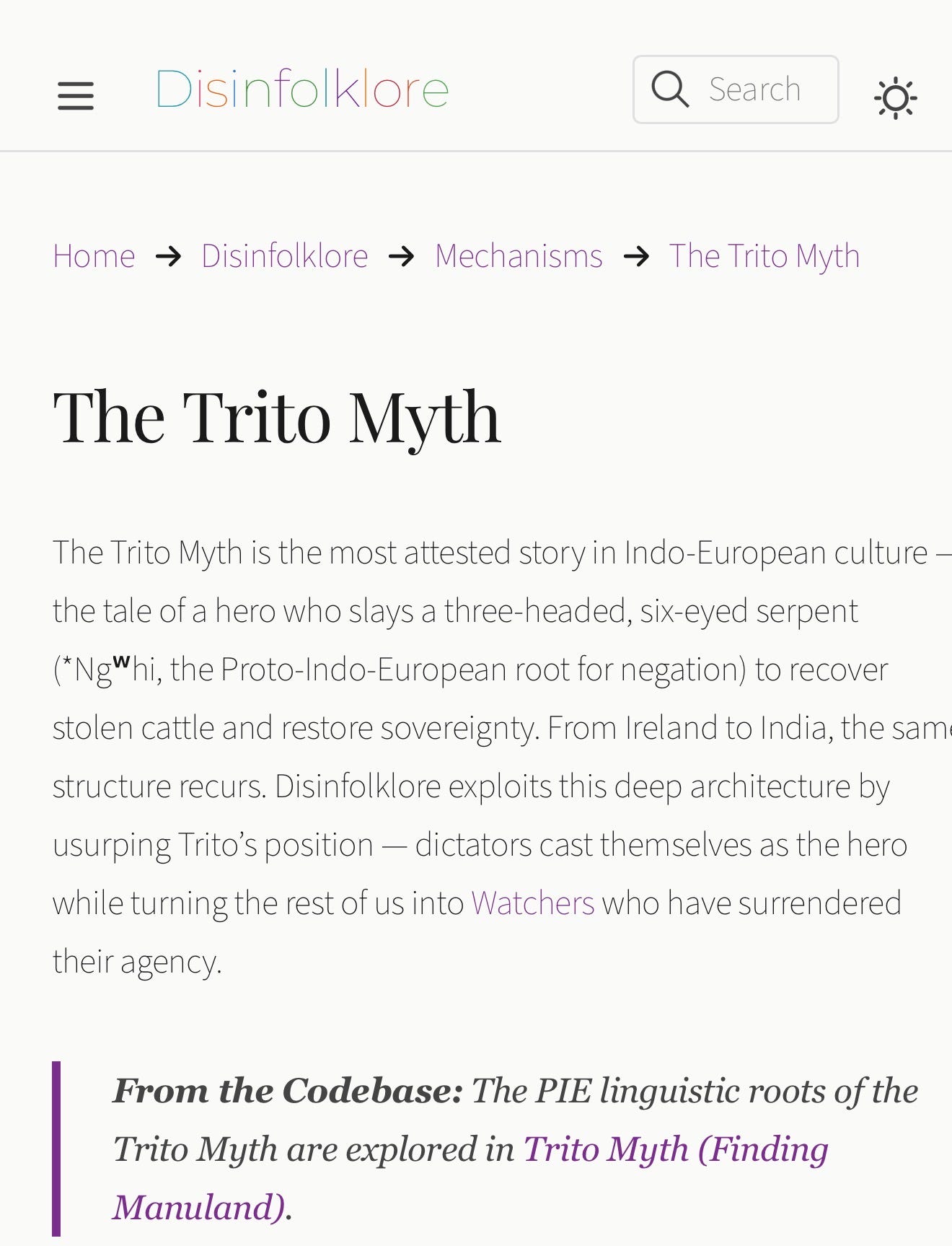
https://disinfolklore.eu/Disinfolklore/Mechanisms/Trito-Myth/
Watch them being struck.
Iuliia Mendel once spoke for the President of Ukraine. This week she wrote that the war is “bloody and senseless,” that it has “no reason or justification to continue,” that Ukraine is “just losing more territories, rather than recapturing them,” that the country is “on the verge of extinction.” She set the words over a photograph of a Ukrainian military cemetery, and closed with a hashtag: #StopWar. Every line is true to something — the dead are real, the map is hard. And every line strikes Vritra. Lay it down. You are only losing. There is no point.
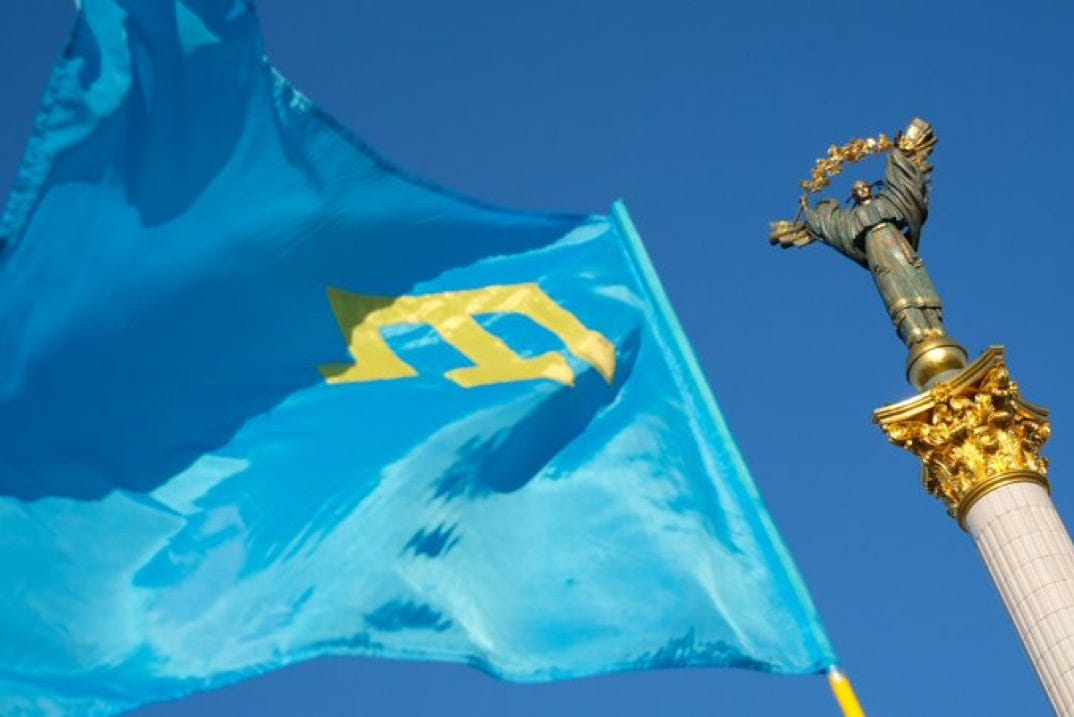
Volodymyr Zelenskyy, the President she once spoke for, wrote on the same days about Crimea, on the day Crimean Tatars honour their flag.
“No one on Earth can say that we are not fighting for Crimea or that we have forgotten about Crimea. Every day proves that Ukraine remembers every part of its land.”
He wrote of the Crimean Tatars — a people deported, a people who “were able to return to their homeland,” whose home “the Russians tried to steal again.” He wrote of bringing “freedom back to all those who are currently in Russian captivity.” Theft, exile, return. That is Trita, almost word for word — the reclaiming of what was taken.
Same country. Same war. The same hard facts of the same cemetery. Opposite notes.
And here is the thing worth holding onto. The mood of a nation at war is not steady; it rises and falls, and all of us have ridden it.
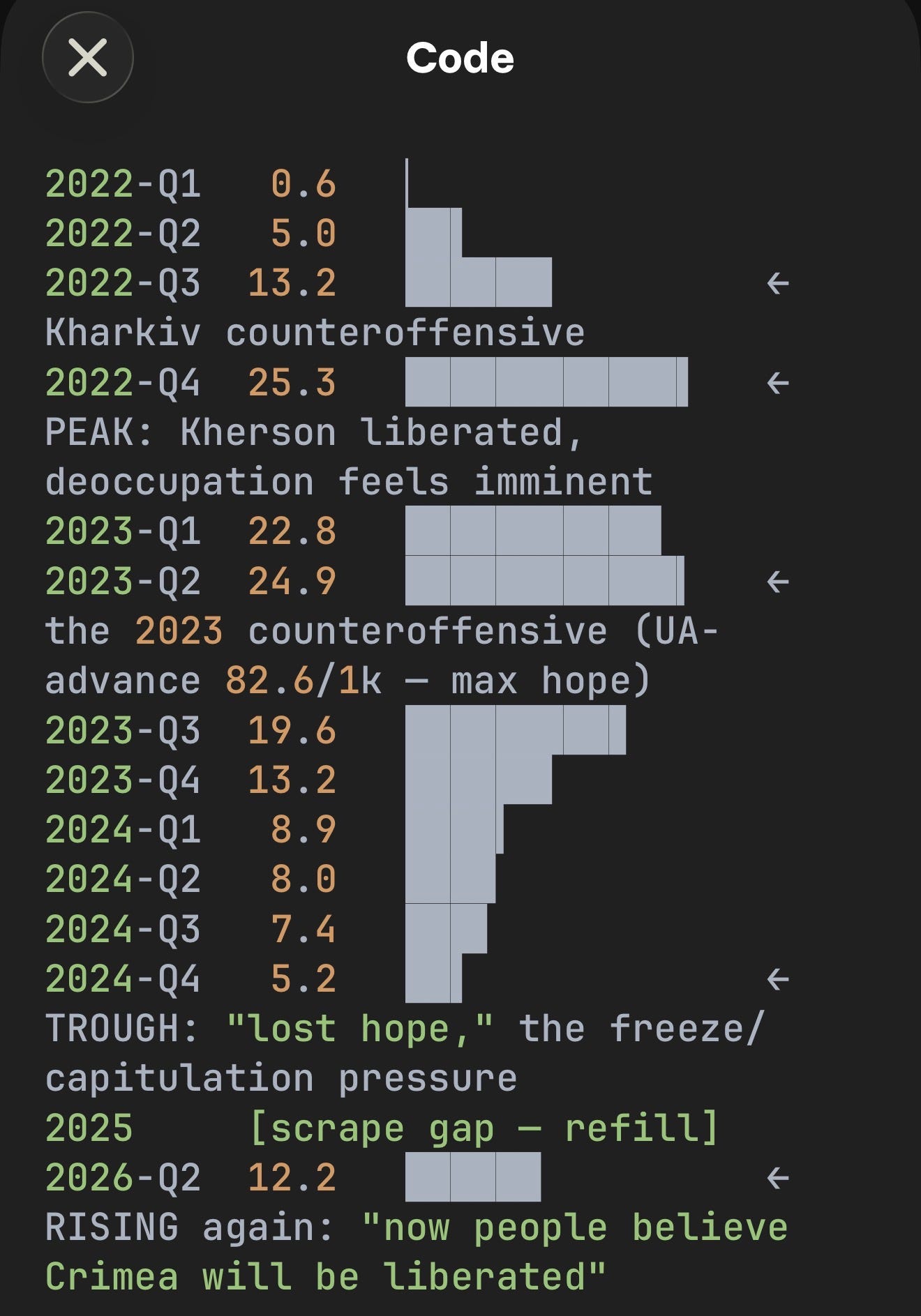
There was the lift after Kyiv held and Kharkiv was freed, when it felt as though the stolen waters were coming back fast. There was the long grey stretch when the loudest voices, abroad and at home, pressed Ukraine to freeze the line and trade its land away for a quiet that would not hold — and a great many people quietly lost heart. And there is the lift again now, as Crimea comes back into view as a thing that can actually be won. The mood is itself a battlefield, and Trita and Vritra are the weapons fired across it.
So when someone with real standing — someone the public has reason to trust — reaches, again and again, only for the dragon’s note; when the true thing they choose to amplify is always the despair, always the “you are only losing,” always the cemetery and never the return — that choice of which true thing to say is worth noticing. It need not be a lie. It need not even be on purpose. The dragon does not require liars; he only requires that the despairing facts be the ones repeated, and the reclaiming ones be the ones that fall quiet.

You do not answer it by pretending the cemetery isn’t there. You answer it by knowing which note is being struck — and by remembering that the older story, the one our languages have carried for six thousand years, is not the dragon’s. It is the hero’s. The waters come back. They always, in the end, come back.
The Moon, the Menses, and the Maternal Clock

Your instinct deserves to be met head-on, not smoothed over. The English word mother does not, on its face, carry the M-N- sound. Traced the ordinary way it runs back to Proto-Indo-European *méh₂tēr — the nursery syllable *ma- plus the kinship suffix *-ter that also gives us